Ariana Page Russell

“A body becomes an index of passing time. Skin reveals how bones shift, muscles loosen, freckles and wrinkles form, and bruises appear. I am interested in this as a fashion of skin, including the way a blush decorates one’s cheek, freckles form constellations on an arm, or hair creates sheen on skin’s matte surface. Skin also protects us while revealing internal emotions, offering a translucent space for adornment. I create images that explore the skin as a document of human experience, using my own hypersensitive flesh to illustrate the ways we expose, express, adorn and articulate ourselves.”
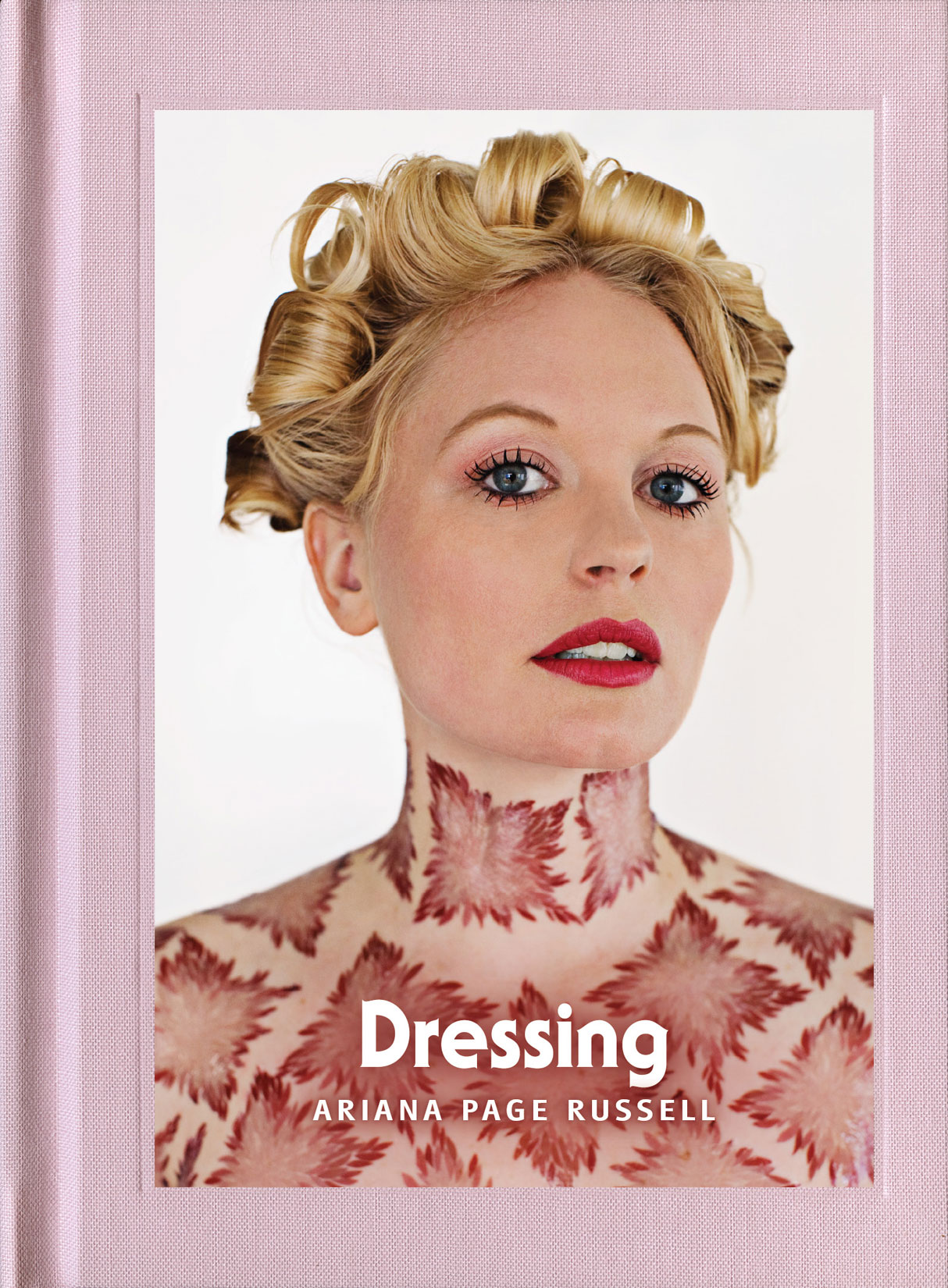
Ariana's recent exhibitions include the Royal Hibernian Academy in Dublin; Town Hall Gallery in Australia; the Luminato Festival in Toronto, Canada; Adelphi University in New York; and Museo de Arte Contemporáneo in Bolivia. Her work has appeared in Art in America, the Huffington Post, Wired, The Atlantic, VISION Magazine: China, and the monograph Dressing, published by Seattle-based DECODE Books. She was featured on ABC News 20/20 and was a recent participant in the Sexto Encuentro Mundial de Arte Corporal in Caracas, Venezuela. She received her MFA from the University of Washington, Seattle in 2005.
BLOOM BACK series
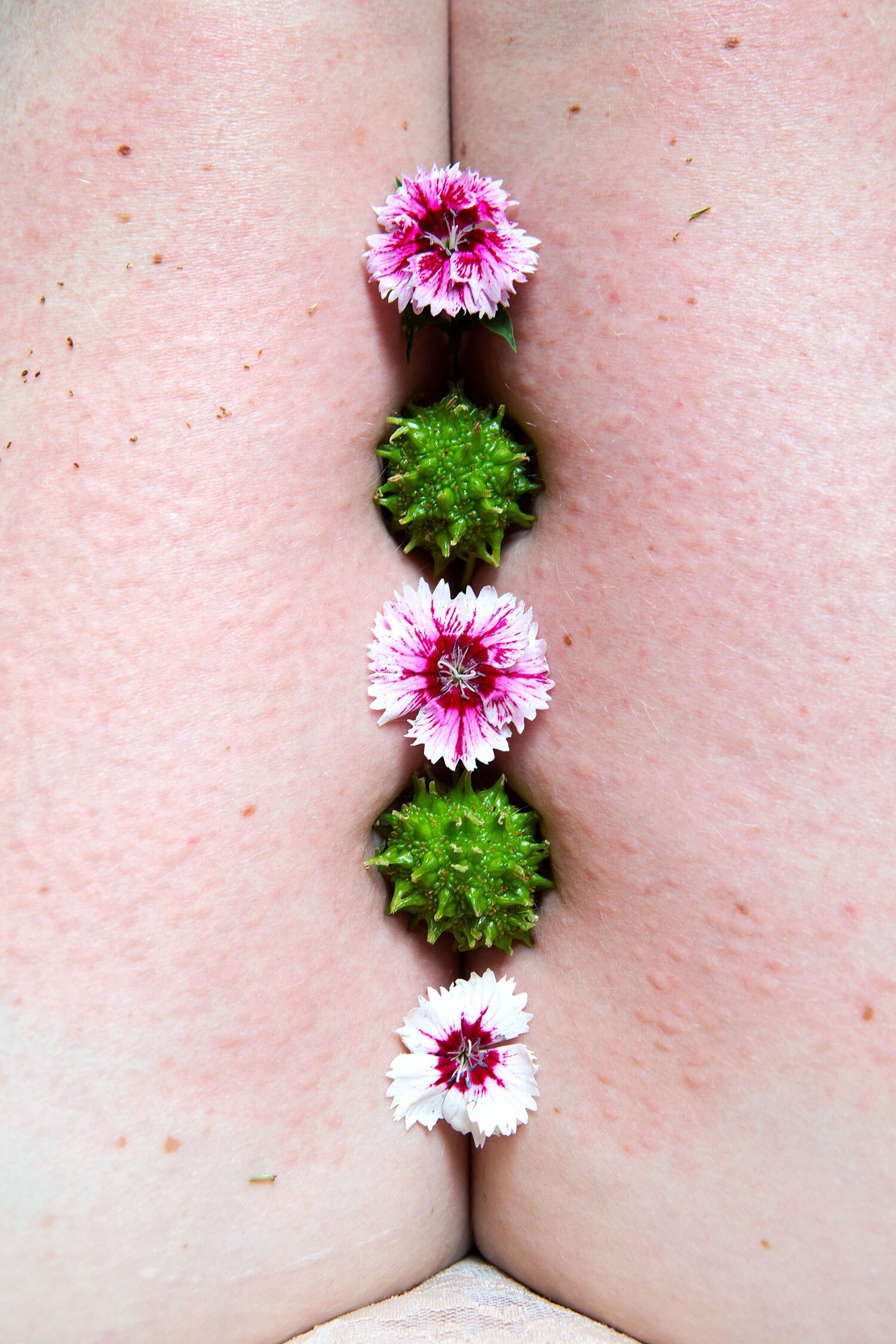
Rainbow Pink
2020, archival pigment print, 19 x 13 inches, $300
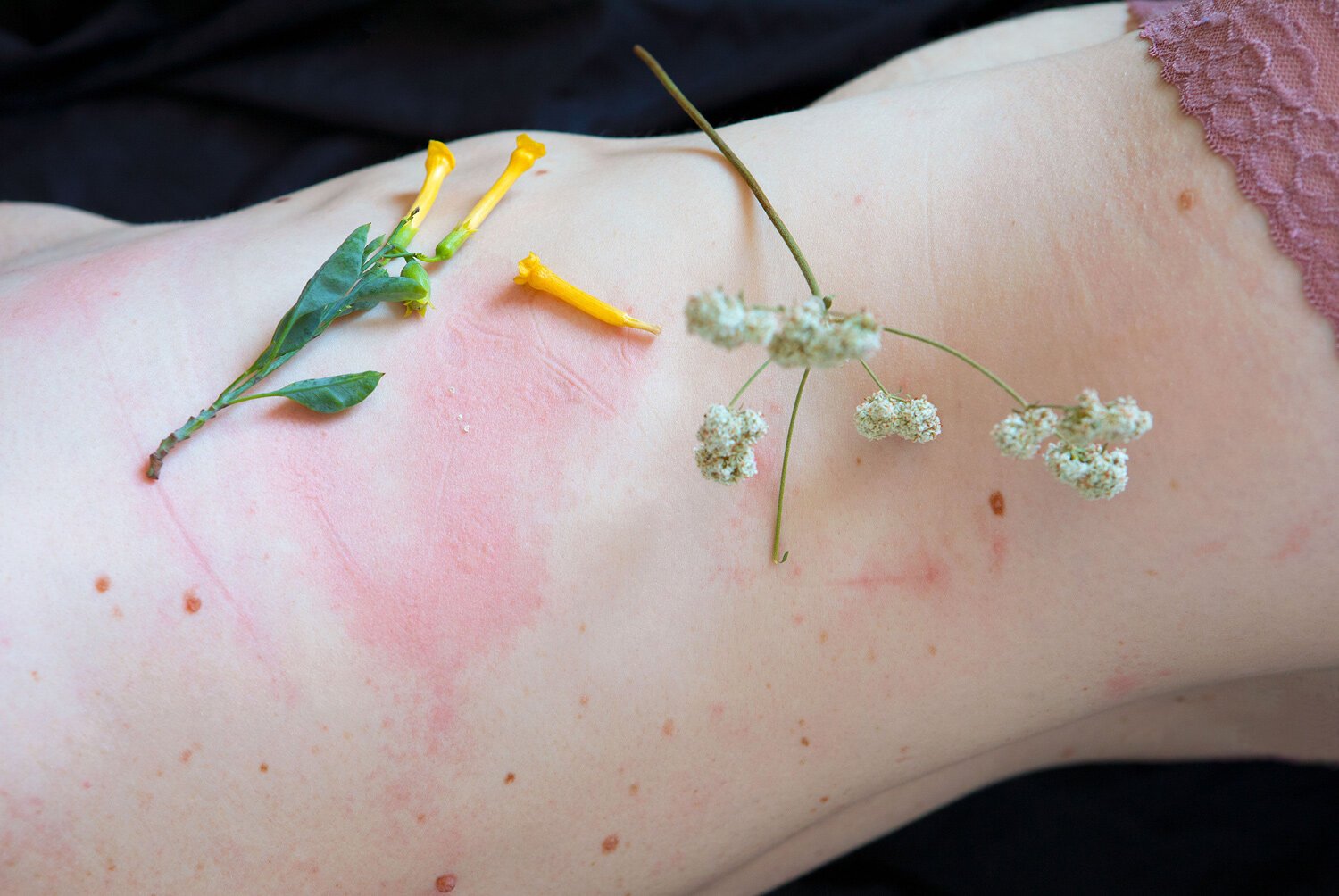
Tree Tobacco
2020, archival pigment print, 13 x 19 inches, $300
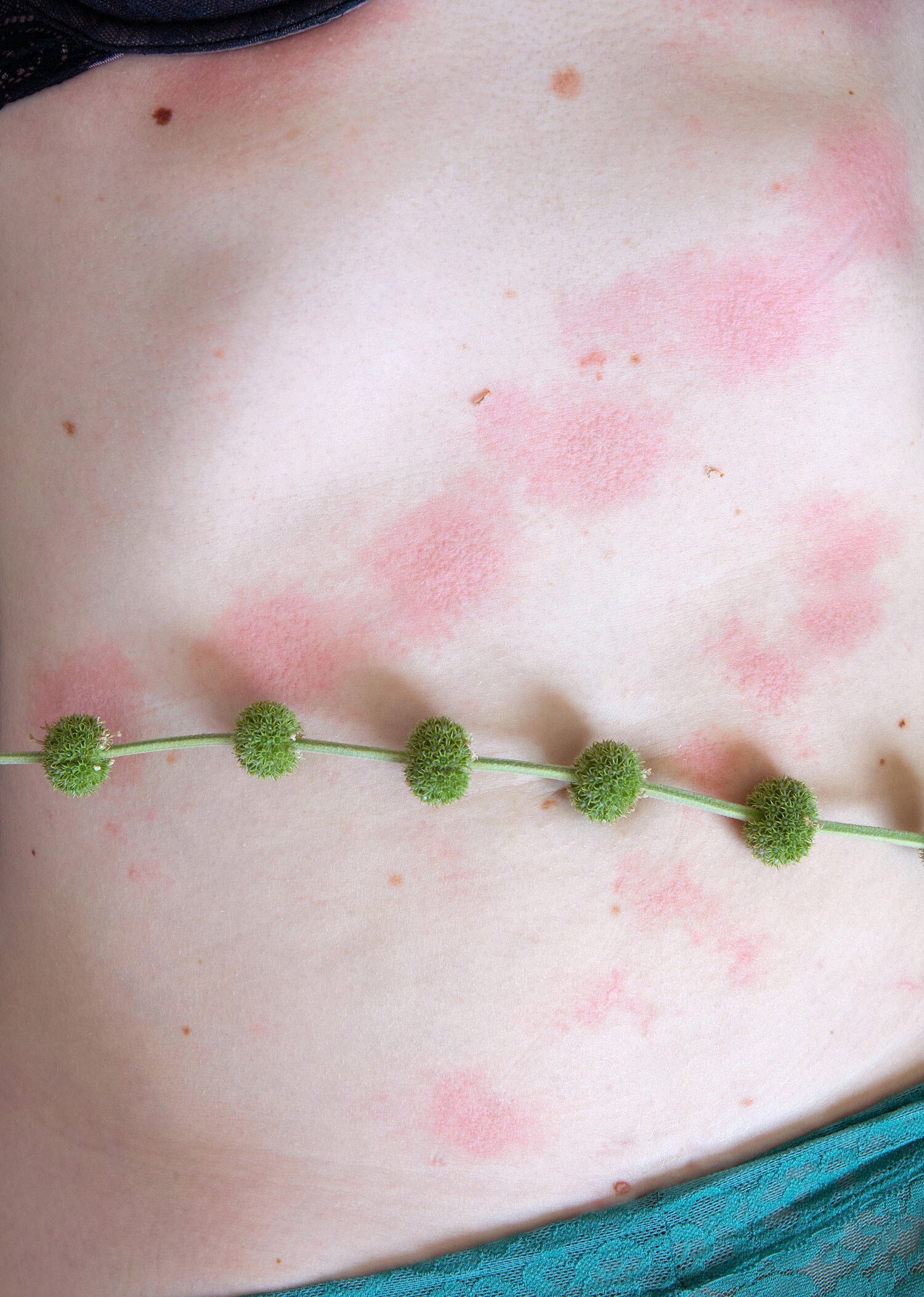
Wild Horehound
2020, archival pigment print, 19 x 13 inches, $300
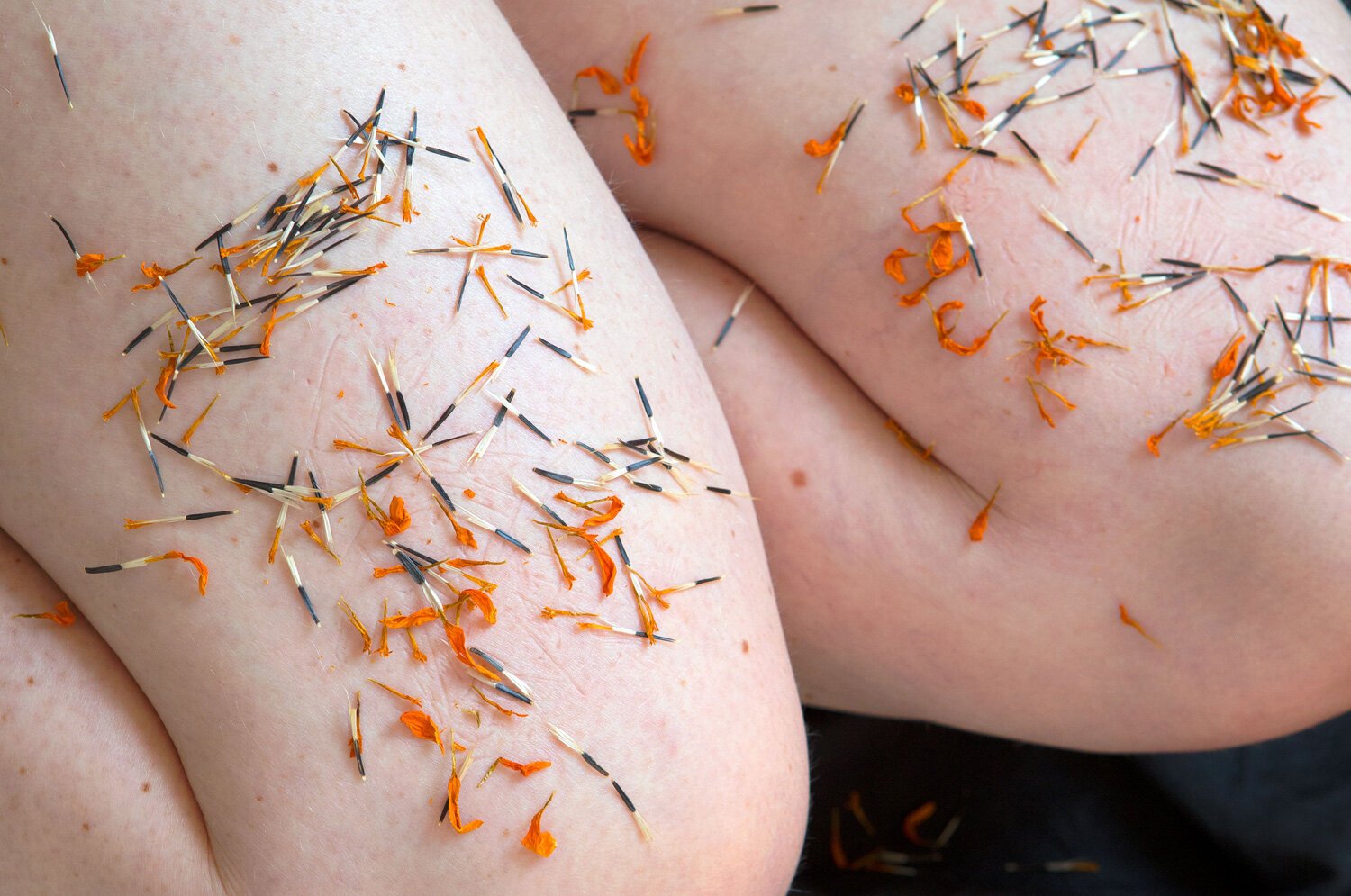
Marigold
2020, archival pigment print, 13 x 19 inches, $300
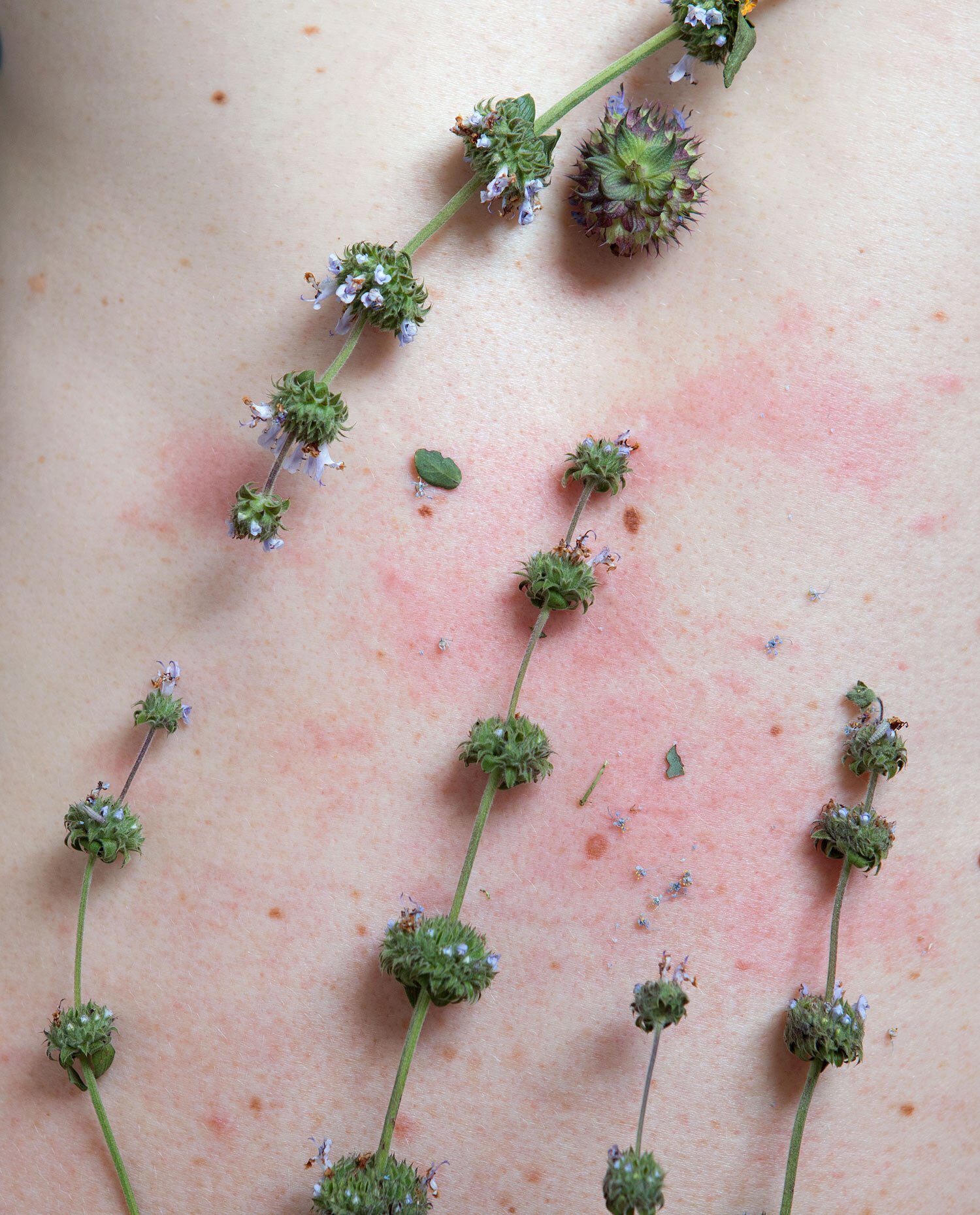
Black Sage
2021, archival pigment print, 19 x 13 inches, $300
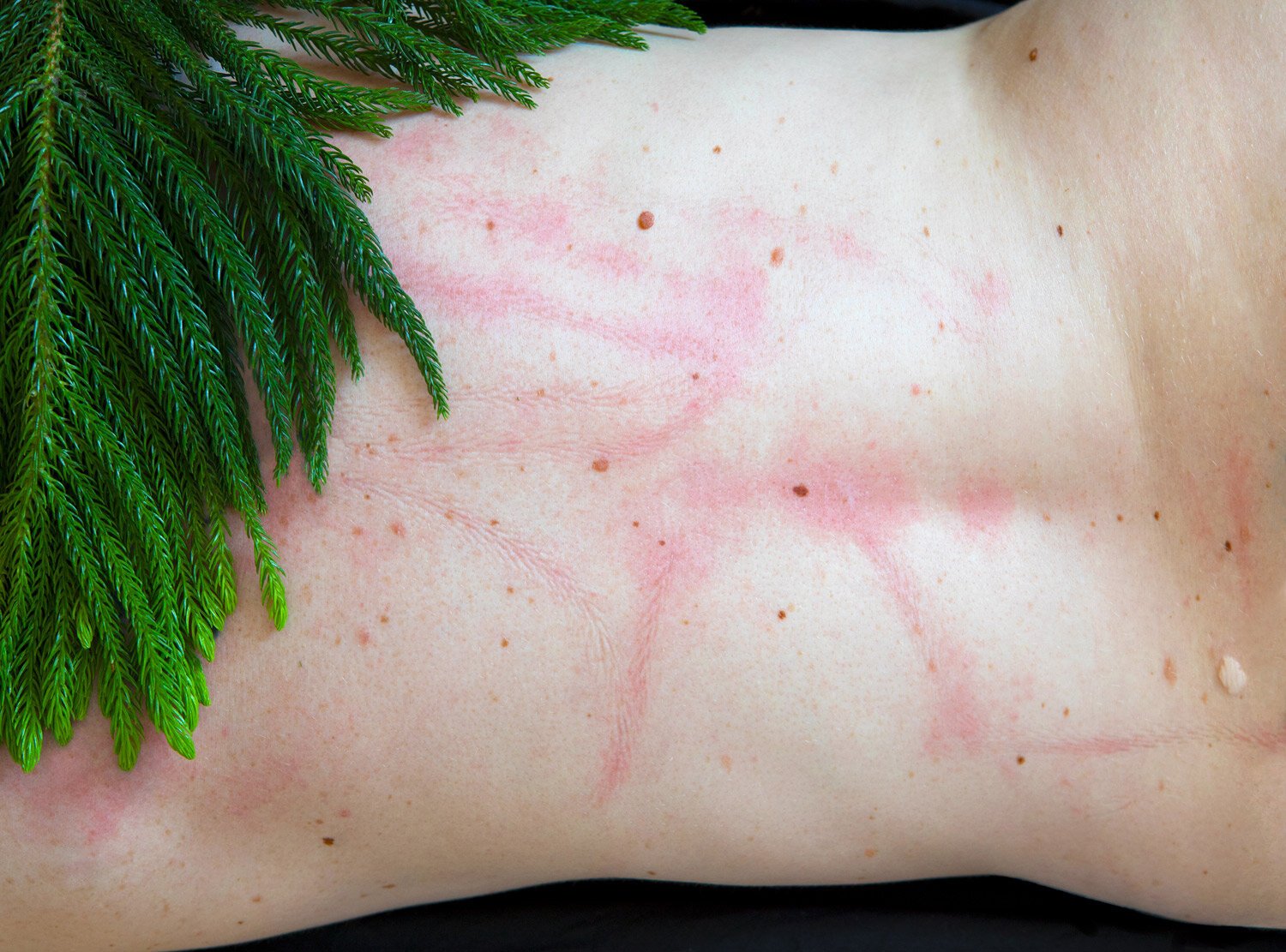
Star Pine
2020, archival pigment print, 13 x 19 inches, $300
SERIES INFO
“The blooms, my skin, and how my body understands its place in the Southern California landscape. Impressions from local flora that stay long enough to photograph, temporarily changing the tactility of my skin, mirroring what’s pressed against it. Reverence for the life this Tongva land brings forth. I collect the flora foraged in and around the mountains near my home. One way I get to know it is to press it to my skin. This reveals the scent and outline of the plant. I like to see what kind of marks are left on me. I have very sensitive skin so any little pressure or scratch leaves a painless, temporary welt. It’s due to a condition called dermatographia, which literally means ‘skin writing.’ With my dermatographia and the natural materials I gather, a photographic series called Bloom Back came to be. My skin blooms back at the plant pressed against it, offering some reflection and appreciation, seeing how bodies can echo their surroundings. It feels good to share a moment with this beauty, hoping to absorb a bit of it.”
> Please contact the Gallery for availability and pricing for the following artworks.
INTERIOR OPTICS series
SALMON
2015, archival inkjet print, 35 x 26.25 inches, edition of 8 plus 2 A.P.'s
RUBY
2015, archival inkjet print, 30 x 21.25 inches, edition of 8 plus 2 A.P.'s.
LILAC
2015, archival inkjet print, 24.75 x 20 inches, edition of 8 plus 2 A.P.'s
VIOLET
2015, archival inkjet print, 40 x 30 inches, edition of 8 plus 2 A.P.'s
AQUA
2015, archival inkjet print, 30 x 22.5 inches, edition of 8 plus 2 A.P.'s
ULTRAMARINE
2015, archival inkjet print, 30 x 23.5 inches, edition of 8 plus 2 A.P.'s
AMETHYST
2015, archival inkjet print, 30 x 45.25 inches, edition of 8 plus 2 A.P.'s
OPAL
2015, archival inkjet print, 28 x 45.5 inches, edition of 8 plus 2 A.P.'s
TEAL
2015, archival inkjet print, 22.5 x 28 inches, edition of 8 plus 2 A.P.'s
SERIES INFO
This body of work is a series of photographic images which simulate scientific optical instruments (such as “two-photon excitation (TPE) fluorescence microscopy” high-resolution laser imaging) that can detect and “read” layers under the skin—the dermis, epidermis, and so on. These images show an internal topography—the many depths just under the surface that reflect and refract light like a prism—which reveal a hidden, mysterious, often extraterrestrial landscapes. In Interior Optics, skin becomes an “instrument” to detect and reflect light from within. By manipulating images of her skin with varying tones and saturation, this light becomes visible revealing depth and layers just under the skin. This simulation, in conjunction with dermatographia scratches, emphasizes the surface detail in such a way that it becomes a surprising and colorful topography. We see the hair, follicles, dermis, epidermis, and glands, all at once.
BLOUSE series
CORD
2011, archival inkjet print, 20 x 27 inches, edition of 8
TUCK
2011, archival inkjet print, 30 x 40 inches, edition of 8
NET
2011, archival inkjet print, 20 x 27 inches, edition of 8
FOLD
2011, archival inkjet print, 30 x 40 inches, edition of 8
SERIES INFO
The skin is a porous surface, and challenges with it often have to do with personal boundaries. Russell has dermatographia, a condition in which her immune system exhibits hypersensitivity through the skin, causing painless, temporary welts that emerge when lightly scratched. The symptoms of dermatographia create a drama that plays on the skin, allowing Russell to address the aftermath of bodily contact. The flesh offers evidence of a physical exchange, albeit unaccompanied by narrative or explanation. Her skin, while unable to disguise the inflicted mark, invokes the action that brought it to the surface.
Russell’s depictions of the body allow her images to explore the free and fluid nature of sexuality, adornment and expression. In the photographs Cord and Net, her legs are etched with welts that mimic the back seams and fishnet designs of hosiery. Here, adornment of the body is illusory as Russell creates a veritable screen that both springs from and protects the flesh.
SAVE FACE series
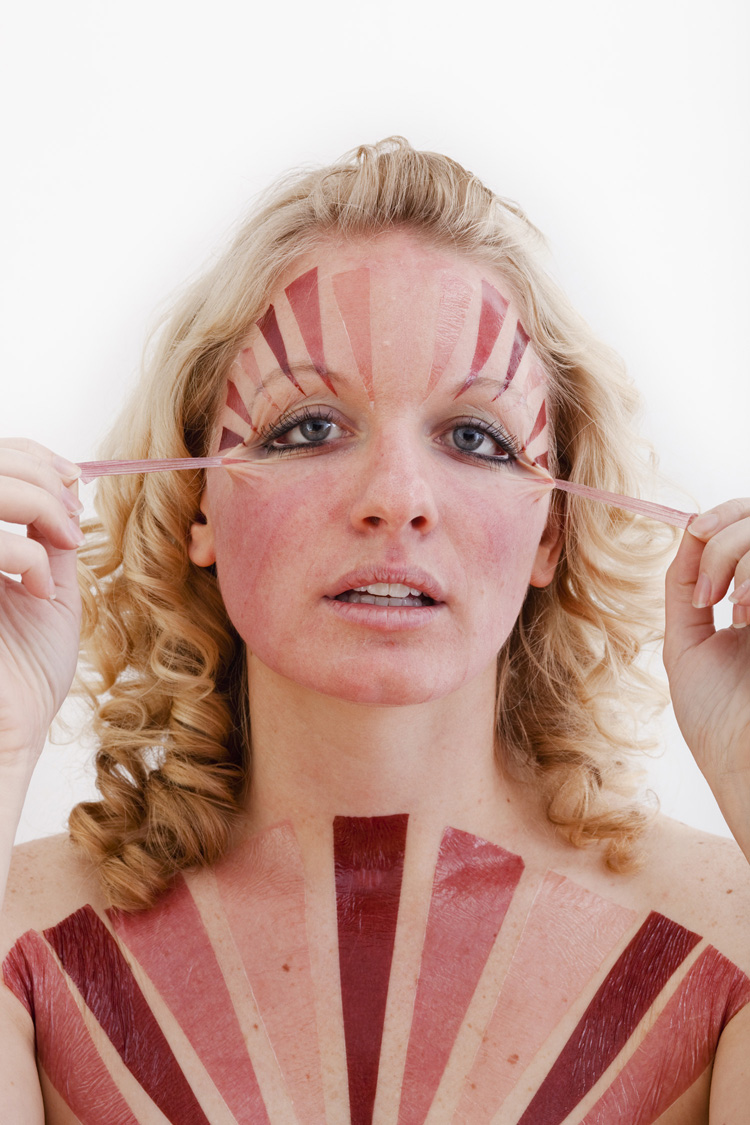
RANT
2010, archival pigment print, 30 x 20 inches, edition of 8 + 2 A.P.’s
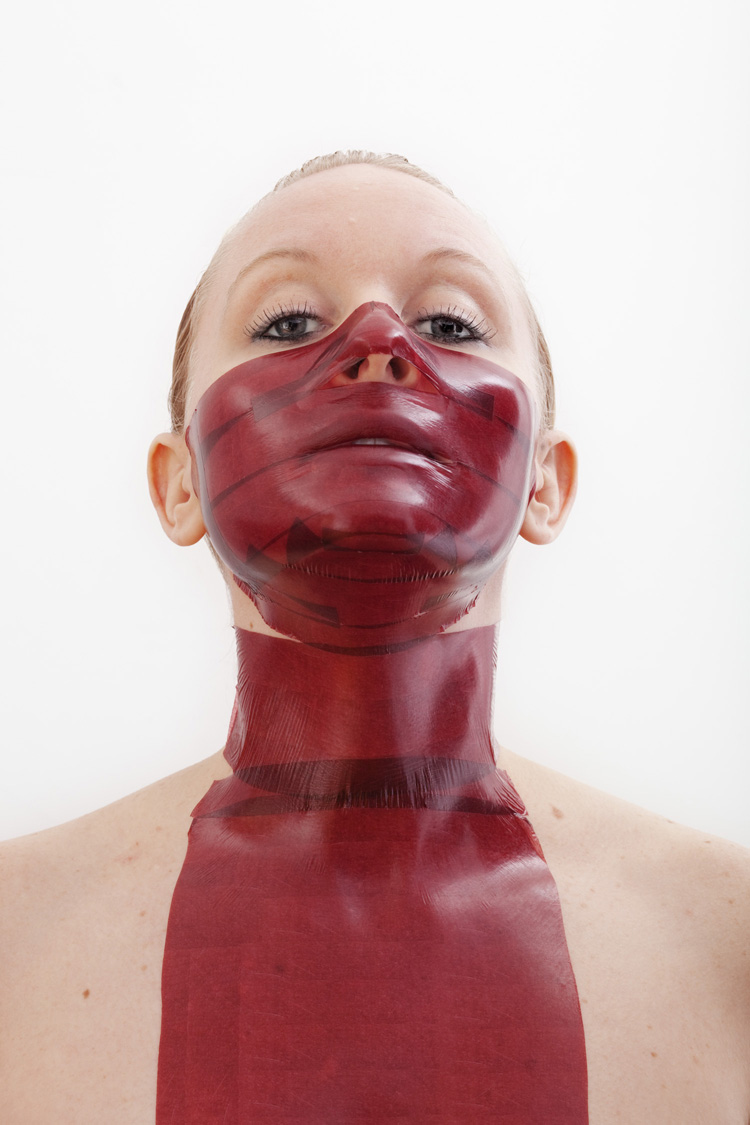
SEETHE
2010, archival pigment print, 30 x 20 inches, edition of 8 + 2 A.P.’s
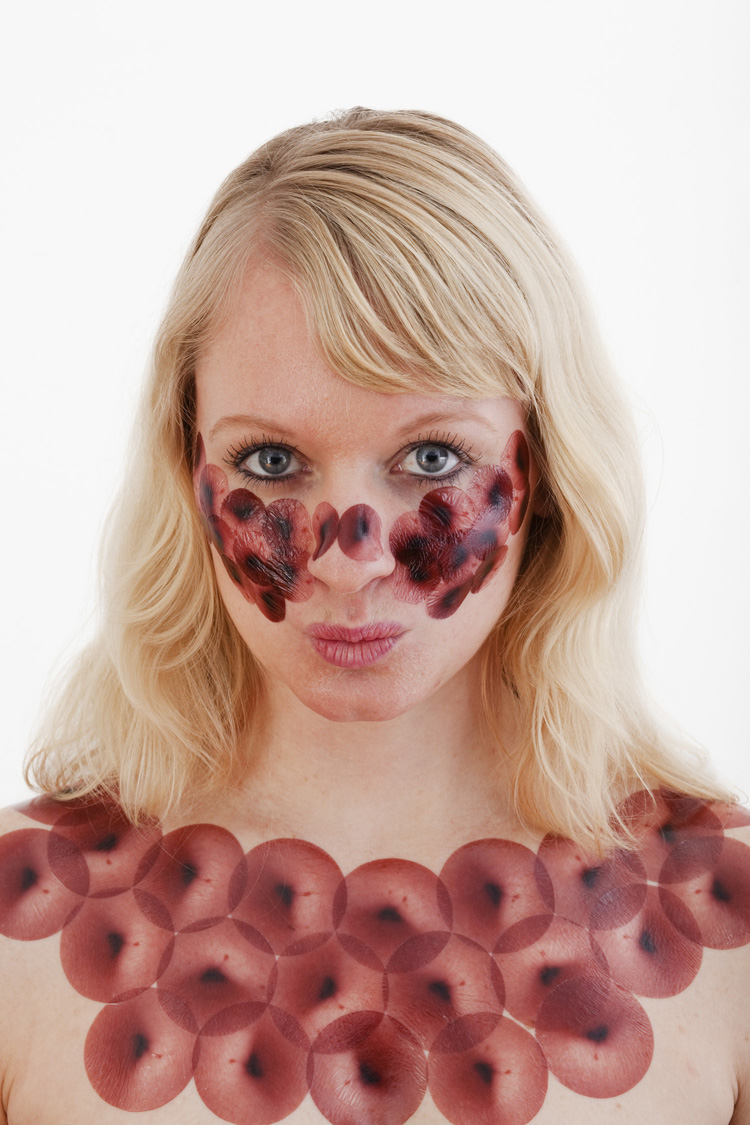
GUSH
2010, archival pigment print, 30 x 20 inches, edition of 8 + 2 A.P.’s
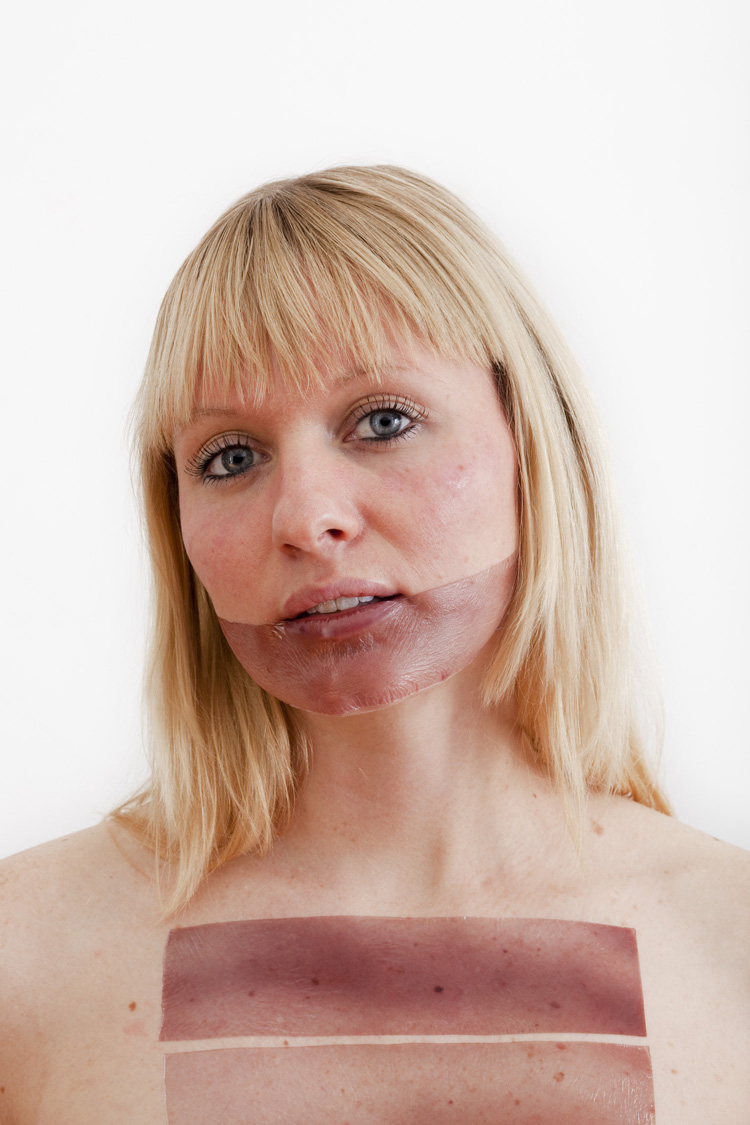
RAVE
2010, archival pigment print, 30 x 20 inches, edition of 8 + 2 A.P.’s
SOOTHE
2010, archival pigment print, 30 x 20 inches, edition of 8 + 2 A.P.’s
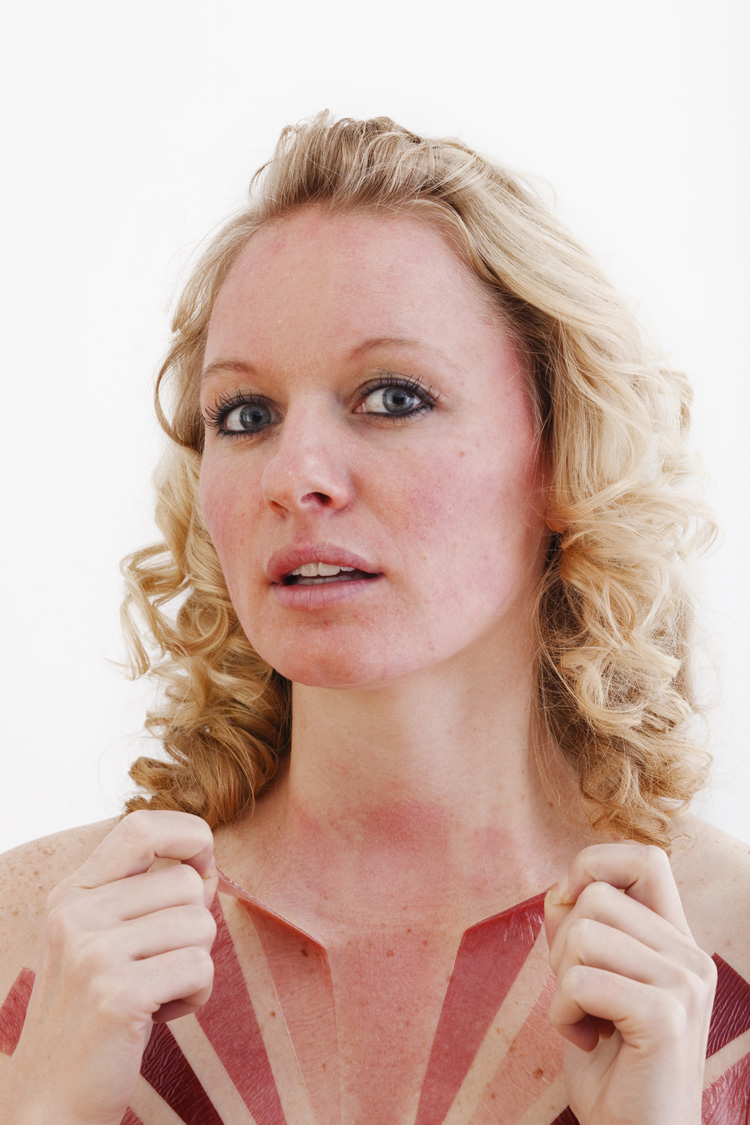
RADIATE
2010, archival pigment print, 30 x 20 inches, edition of 8 + 2 A.P.’s
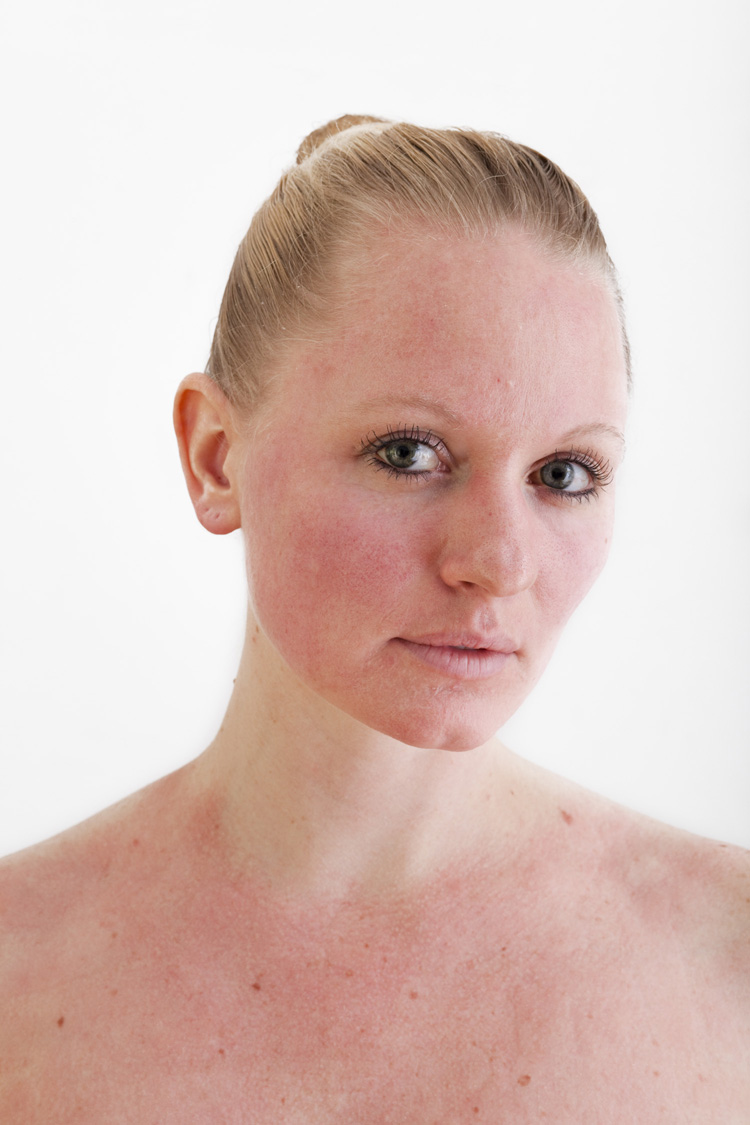
BEAM
2010, archival pigment print, 30 x 20 inches, edition of 8 + 2 A.P.’s
SERIES INFO
REVIEW Seattle Times
“Living in a city with millions of people, I'm used to seeing a lot of faces in a day. They all blur together, but a few stand out. Some subtle interaction, a glance or expression, catches my attention and there’s eye contact. These fleeting moments reveal something deeper than the persona.
“In Chinese language there are 98 different concepts of “face.” They believe the face is a mask with incarnate spirit—a totem—and we are saving or losing it to stay members of society. In some American Indian cultures people use face paint to describe an emotion, augment one’s appearance and power, or prepare for battle.
“To some degree we have control over how we portray ourselves and what’s revealed, but we still leak emotions and aspects of our being. This makes us human. Using temporary tattoos made from photographs of my flushing skin, I wear this vulnerability as war paint, playing with the idea of face.”
DRESSING
24 page hardcover book published by DECODE, Inc.; 1st edition, in English, full color throughout with one hand-tipped in print, signed and numbered in an edition of 500; dimensions: 7.3 x 5.4 x 0.4 inches. $40
Also available: Pharoh, 2010, limited edition archival pigment print, signed and numbered, with copy of Dressing. Sheet size: 20 x 16 inches Image size: 19 x 13 inches Edition of 20, signed and numbered. $600